
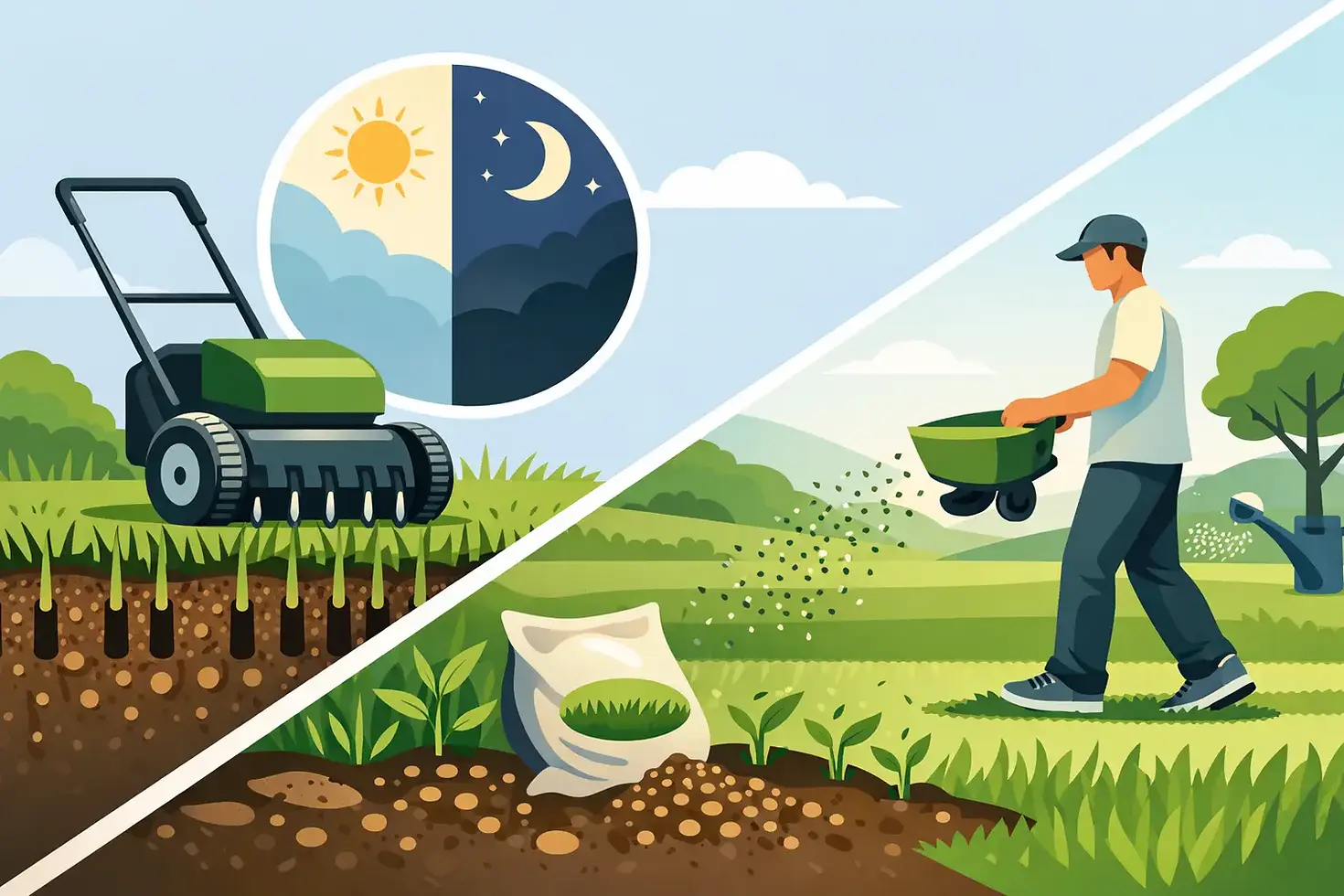
Best Time for Aeration and Overseeding

If your lawn thins out every summer, fills up with weeds, or never seems to bounce back the way you hoped, timing is usually part of the problem. The best time for aeration and overseeding is not just “sometime in the fall.” For Kansas City lawns, the window is more specific than that, and getting it right can be the difference between fresh, thick turf and seed that struggles to establish.
For most cool-season lawns in the Kansas City metro, early fall is the sweet spot. That usually means late August through September, with some flexibility into early October depending on weather. This timing gives grass seed warm soil for germination, cooler air temperatures for less stress, and fewer weed pressures than spring. It is the season where recovery and establishment line up in your favor.
Why the best time for aeration and overseeding is fall
Aeration and overseeding work best when the lawn can heal quickly and new seedlings can develop strong roots before harsh weather arrives. In our area, fall checks those boxes better than any other season.
The soil is still warm from summer, which helps seed germinate faster. At the same time, cooler daytime highs and milder nights reduce stress on both mature turf and young seedlings. That balance matters. Seed that sprouts in hot weather often dries out too quickly, while seed applied too late in the year may germinate slowly or not establish enough before winter.
Fall also gives cool-season grasses their natural growth season. Tall fescue, which is common in Kansas City lawns, wants to put energy into root development during this period. When you aerate, you relieve compaction and improve oxygen movement, water penetration, and nutrient access. When you overseed right after, you are placing seed into a lawn environment that is actually ready to support it.
Spring can produce some germination, but it comes with more obstacles. Weed competition ramps up fast, especially from crabgrass and other annual weeds. Summer heat then arrives before young grass has had enough time to mature. That is why spring seeding often looks promising for a few weeks and then fades out by July.
Best timing in Kansas City lawns
If you want a practical local answer, the best time for aeration and overseeding in Kansas City is usually from the last two weeks of August through the end of September. That is the core window.
A little earlier can work if summer stress has eased and irrigation is available. A little later can still be successful if temperatures stay moderate and the lawn gets consistent moisture. But once you push too far into October, the odds start dropping. Shorter days, cooler soil, and slower growth mean less time for seedlings to establish before winter dormancy.
Weather always matters more than the calendar by itself. One year, late August may be ideal. Another year, a stretch of extreme heat could make mid-September the smarter move. That is why local turf knowledge matters so much. Kansas City lawns deal with clay-heavy soils, summer stress, and shifting fall conditions, so a one-size-fits-all date rarely tells the whole story.
What aeration actually fixes
Many homeowners think of aeration as simply “poking holes in the lawn,” but that undersells it. Core aeration removes plugs of soil and creates space where roots can breathe and expand.
In our region, compaction is a common issue. Foot traffic, mowing patterns, pets, and dense clay soils all contribute. When the soil is compacted, water tends to run off instead of soaking in, roots stay shallow, and the lawn becomes more vulnerable to heat and drought. Fertilizer can only do so much when the root zone is struggling.
Aeration helps break that cycle. It improves airflow in the soil, helps reduce surface sealing, and opens up better conditions for seed-to-soil contact. That last part is especially important with overseeding. Seed needs contact with the soil to germinate well. Aeration creates thousands of opportunities for that to happen.
Why overseeding works better after aeration
Overseeding on its own can help fill thin areas, but pairing it with aeration gives you a much stronger result. The holes left behind by core aeration catch seed, protect it from being washed away, and hold moisture where germination happens.
This is one of those situations where the services are better together than separately. Aeration prepares the site. Overseeding introduces improved density and helps the lawn recover from thinning, disease damage, insect stress, drought stress, and normal wear.
For fescue lawns, overseeding also helps maintain a younger, thicker stand of grass over time. Even a generally healthy lawn can lose density year after year. Fall overseeding is often what keeps it looking full instead of slowly becoming more open and weed-prone.
When spring aeration and overseeding make sense
Fall is still the best overall choice, but there are a few situations where spring work can be reasonable.
If a lawn has severe winter damage, large bare areas, or missed the fall window completely, spring overseeding may be better than doing nothing. It can also help stabilize soil and improve appearance heading into the growing season. The trade-off is that the new grass has a much tighter timeline before summer heat arrives.
If you seed in spring, moisture management becomes more important, and weed control options get more complicated. Some pre-emergent products that prevent crabgrass can also interfere with new seed establishment. That leaves homeowners trying to choose between weed prevention and seeding success. In many cases, that is why we encourage fall planning instead of waiting until the lawn is already struggling.
Spring aeration by itself can still be useful for compacted lawns, especially if the goal is soil improvement rather than seeding. But if the main objective is building turf density, fall remains the stronger play.
Signs your lawn is ready for aeration and overseeding
You do not need a completely bare lawn to benefit from this service. In fact, some of the best candidates still look fairly green from the street. The clues show up closer.
If your lawn feels hard underfoot, puddles after rain, or struggles to absorb water evenly, compaction is likely part of the issue. If you see thinning in sunny areas, patchiness after summer, or more weeds moving into weak sections, overseeding can help restore density. Lawns with heavy foot traffic, active kids, dogs, or repeated mower patterns also tend to benefit.
Another common sign is a lawn that greens up but never thickens. That usually points to a turf stand that needs both better soil conditions and fresh grass plants to improve fill-in.
How to get the timing right before service day
Good results start before the machine ever hits the lawn. If you are planning fall aeration and overseeding, think ahead by a few weeks.
Mowing should be kept consistent leading into service, and the lawn should not be allowed to get excessively tall. Soil moisture matters too. Slightly moist soil is ideal for core aeration. Rock-hard, baked-out ground does not pull clean plugs very well, while overly saturated soil can create a mess and reduce effectiveness.
Herbicide timing also matters. If broadleaf weeds were recently treated, or if a pre-emergent application is on the schedule, that can affect the seeding plan. This is where professional timing helps avoid one treatment canceling out the next.
After seeding, watering becomes the big variable. New seed needs frequent, light moisture early on to keep the top layer of soil from drying out. Once seedlings emerge and begin developing, watering should gradually shift deeper and less frequently to encourage stronger rooting.
It depends on your lawn, not just the season
The best time for aeration and overseeding depends on your grass type, your lawn’s condition, and what happened earlier in the season. A healthy fescue lawn with mild thinning may only need a standard fall service. A lawn that dealt with fungus, grub damage, or serious drought stress may need a more tailored plan.
This is also where homeowners can get tripped up by national advice. General lawn tips often ignore local soil structure, Kansas City weather swings, and the fact that two lawns on the same street can behave differently based on irrigation, shade, and traffic. Turf care is not random, but it is not cookie-cutter either.
That is one reason specialized lawn care matters. At Turf Geeks, we geek out about the details because they affect whether your lawn just survives or actually improves.
If you have been staring at a thin lawn and wondering whether to wait, the answer is simple. Give your grass its best shot when the season is working with you, not against you. A well-timed fall aeration and overseeding service can set up thicker turf, better root development, and a lawn that looks a whole lot stronger next spring.


Comments