
Aeration and Overseeding Benefits Explained

If your lawn looks thin every summer, struggles after a wet spring, or never quite bounces back from heat and foot traffic, the issue often starts below the surface. That is where aeration and overseeding benefits really show up. This service is not just about putting down more seed. It is about fixing compaction, improving seed-to-soil contact, and giving your turf a better shot at filling in before weeds take over.
In the Kansas City area, that matters more than most homeowners realize. Our lawns deal with heavy clay soils, long summer stress, cool-season turf that can thin out, and plenty of wear from kids, pets, and everyday use. When the soil tightens up and the stand of grass gets weak, fertilizer alone will not solve the problem. You need to help the lawn breathe again and introduce new grass where the turf has started to fade.
Why aeration and overseeding work so well together
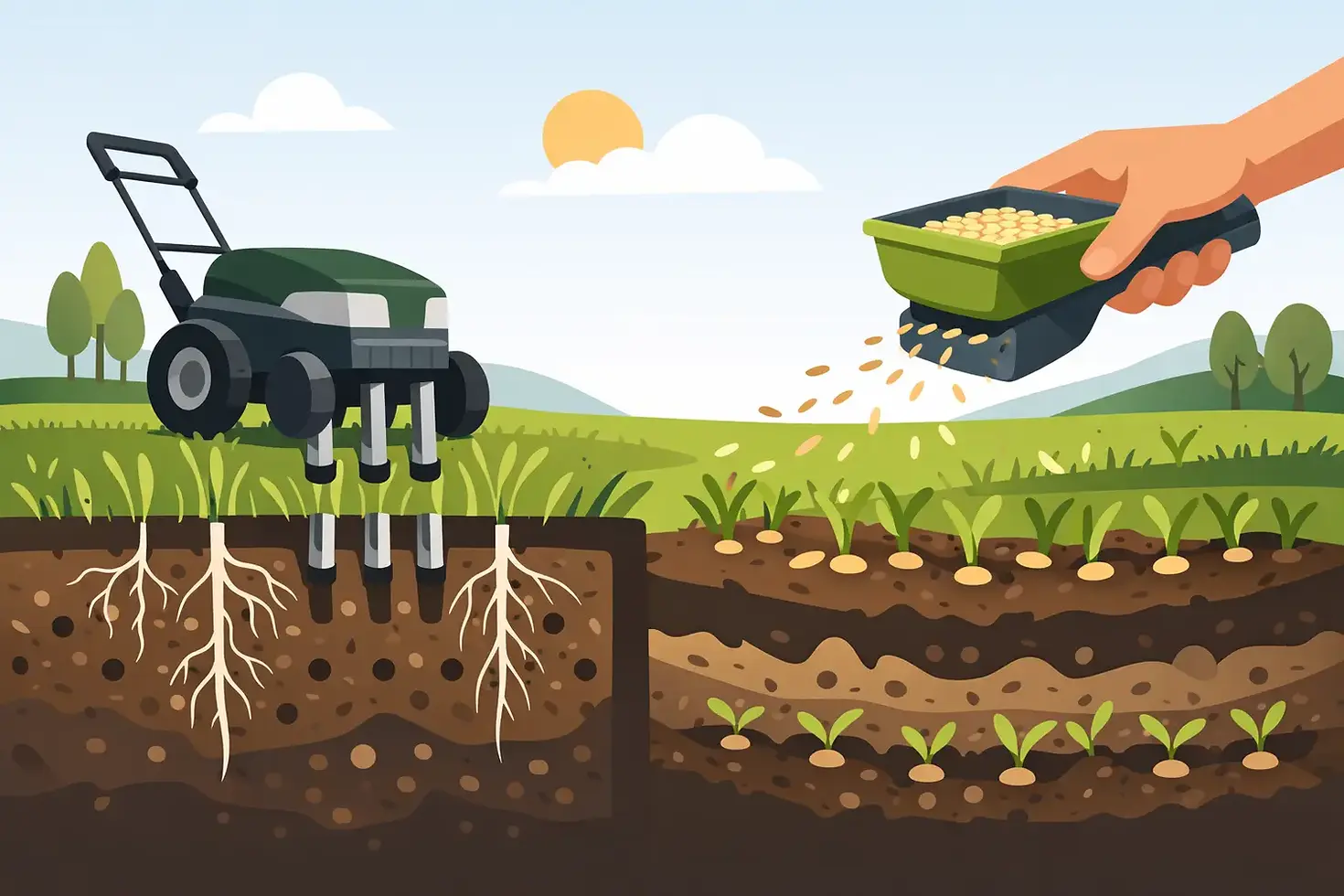
Aeration and overseeding are often paired because each service makes the other more effective. Core aeration pulls small plugs from the lawn, opening channels into compacted soil. Those openings allow air, water, and nutrients to move deeper into the root zone instead of sitting on the surface or running off.
Overseeding follows by placing fresh grass seed into a lawn that already has better access to soil. Without aeration, much of that seed can sit in the thatch layer or dry out before it ever gets established. With aeration, the seed has a much better chance of making direct contact with the soil, which is what drives germination.
That combination is especially useful for cool-season lawns in Kansas City, where tall fescue is common. Fescue does not spread aggressively on its own the way some warm-season grasses do. If it thins out, you usually need to reintroduce seed to rebuild density.
The biggest aeration and overseeding benefits for homeowners
The most noticeable benefit is a thicker lawn. Thin turf leaves open space for weeds to move in, and once those gaps appear, they rarely fix themselves. Overseeding helps fill those bare or weak areas with desirable grass, while aeration improves the conditions that allow that new grass to establish.
Another major advantage is better root development. Compacted soil makes it hard for roots to grow deep and strong. When roots stay shallow, the lawn dries out faster and struggles more during summer heat. Aeration loosens that tight layer enough to improve rooting, which can help the lawn handle drought stress and traffic more effectively.
You also get improved water movement. In heavy clay soils, water often ponds, runs off, or sits near the surface. Aeration helps create pathways for moisture to move into the ground where the roots can actually use it. That does not mean aeration magically fixes drainage problems, but it can noticeably improve infiltration in compacted turf areas.
There is also a weed-control benefit, even though aeration and overseeding are not weed treatments by themselves. A dense, healthy lawn is one of the best long-term defenses against weeds because it leaves less room for weed seeds to germinate. If your lawn is sparse, every thin spot is basically an invitation.
What problems this service actually solves
Homeowners sometimes hear about aeration and assume it is routine maintenance with vague benefits. In reality, it is one of the more practical solutions for a lawn that is underperforming.
If your yard feels hard underfoot, if water seems to sit after rain, or if the grass looks worn down in paths where kids and pets run, compaction is likely part of the problem. Aeration directly addresses that issue.
If the lawn looks patchy, weak, or uneven in color, overseeding may be the missing piece. Older turf can thin gradually over time, especially after disease pressure, summer stress, or inconsistent care. Seeding helps reintroduce vigor, but it works best when the soil is prepared to receive it.
That is the real value here. You are not just treating symptoms. You are improving the growing environment while rebuilding turf density at the same time.
When aeration and overseeding make the most sense in Kansas City
Timing matters. For most Kansas City cool-season lawns, early fall is the sweet spot. Soil temperatures are still warm enough for germination, daytime heat is easing off, and young grass has a better runway to establish before winter.
Spring can work in some situations, but it comes with trade-offs. Weed pressure is higher, weather is less predictable, and young grass often faces summer stress before it is fully mature. Fall gives new seedlings a stronger start and usually better long-term results.
There are exceptions. If a lawn has severe damage, bare areas, or major thinning after summer, waiting too long can mean another season of decline. The best timing depends on the condition of the lawn, the grass type, and what else is happening in the treatment schedule.
What to expect after service
A lot of homeowners expect instant visual improvement, but this is one of those lawn services where the payoff builds over time. Right after aeration, you will see soil plugs across the lawn. They may look messy for a short period, but they break down naturally and help return organic material to the surface.
After overseeding, the lawn needs a little patience and the right watering support. Seed germination depends on temperature, moisture, and seed variety. Some areas may come in faster than others, especially where sun exposure or soil conditions vary.
This is also the stage where expectations need to stay realistic. If the lawn has serious soil issues, heavy shade, disease pressure, or poor irrigation coverage, seeding alone will not solve every problem. Good turf results usually come from combining aeration and seeding with proper fertilization, mowing, and weed management.
Why some lawns respond better than others
Not every lawn starts from the same place. A newer lawn with minor thinning may respond quickly and fill in nicely after one service. An older lawn with years of compaction, thatch buildup, and weak turf may need more than one season of improvement.
Grass type matters too. Tall fescue lawns often benefit significantly from routine overseeding because they are bunch-type grasses and do not spread rapidly into damaged areas. A lawn that has lost density from heat or disease usually needs seed to recover that fullness.
Then there is the soil itself. Kansas City lawns often sit on dense clay, and that changes the game. Clay can hold nutrients well, but it also compacts easily and slows water movement. That is one reason aeration is so valuable here. It addresses a local turf challenge, not just a generic lawn care checklist item.
Is aeration and overseeding worth it every year?
It depends on the lawn and your goals. For many cool-season lawns, especially tall fescue, annual fall aeration and overseeding is a smart strategy for maintaining density and keeping the turf competitive against weeds. If the lawn sees a lot of traffic or has naturally compacted soil, yearly service often makes sense.
For healthier lawns with less wear, every other year may be enough. The right schedule should be based on actual lawn conditions, not a one-size-fits-all rule.
That is where specialized lawn care stands out from generic service. A professional should look at compaction, turf density, soil conditions, and seasonal stress patterns before recommending a plan. At Turf Geeks, that kind of lawn-specific decision-making is the whole point. Good turf care is not about doing more services. It is about doing the right ones at the right time.
The long-term payoff of thicker, healthier turf
The best aeration and overseeding benefits are not limited to one season. A thicker lawn tends to look better, recover better, and resist problems better. It can crowd out weeds more effectively, handle wear more evenly, and make every other lawn treatment perform more efficiently.
That long-term effect is what homeowners usually notice after the lawn has had time to improve. The yard starts to feel less patchy and less fragile. You are not constantly staring at thin spots, wondering why the lawn still looks tired after fertilizer or weed control.
Healthy turf is built from the ground up. When the soil is less compacted and the stand of grass is fuller, the lawn has a much better foundation to work with. And for Kansas City homeowners who want a lawn that actually holds up through weather swings, summer stress, and real family use, that is where this service earns its value.
A good lawn does not need gimmicks. It needs the right conditions to grow thick, rooted, and resilient.


Comments